

Barnes TTSX 130 grain .270 Winchester review
Factory loaded Barnes TTSX in the Vor-TX line provide a great option for lead-free monolithic hunting bullets.
Barnes TTSX bullets are a staple of lead-free hunting bullets, with a history of reliable, deadly performance.
Introduction
The Barnes TTSX is one of three main lines of copper bullets produced by Barnes, with the other two being the TSX and the LRX. TTSX stands for Tipped Triple Shock, with its main difference from the normal Triple Shock or TSX being the addition of that polymer tip.
Overview of Construction/Features
The information in the next paragraph is taken from a blog titled ‘How To Pick The Best Hunting Bullet For You’ found here (https://barnesbullets.com/blog/how-to-pick-the-best-hunting-bullet-for-you/). As I mentioned, the biggest change in the TTSX over the older TSX is the addition of a polymer tip that increases the BC (Ballistic Coefficient) to help the bullet retain velocity down range, decrease the effect of wind, and aid in the initiation of expansion. Most TTSX bullets are of a boattail design for the rear, but there are a few that use a flat base. A user should see between 90 and 100% weight retention with a recommendation to keep impact velocities close to 2000 fps.
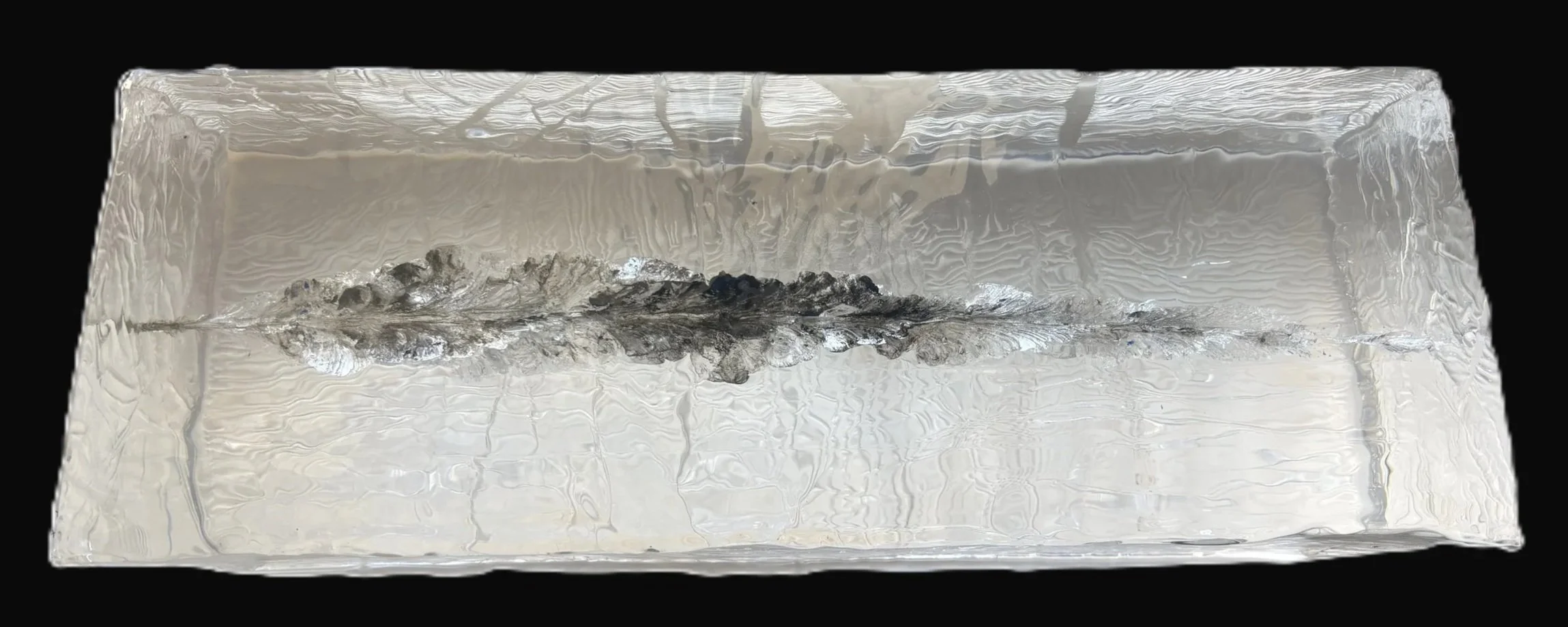
The 130 grain Barnes TTSX from a .270 Winchester shows a classic wound channel pattern with quick expansion, and consistent damage through 16 inches of 10% ballistic gelatin.
Terminal Performance

Table 1- The mean measurements, in millimeters, of the permanent wound channel left in the ballistic gel after being shot with a 130-grain Barnes TTSX from a .270 Winchester. We measured on two perpendicular sides to encapsulate the entirety of that wound channel as best as possible.
For our bullet tests, we use 10% ballistics gelatin from Clear Ballistics to capture a wound channel and a water trap to test weight retention. In this test, we shot a 130-grain Barnes TTSX loaded for the .270 Winchester at 100 yards. From the water trap, our recovered bullet saw 94.6% weight retention. Using a Garmin Xero C2 Chronograph, we measured our muzzle velocity at 3098.7 feet per second compared to a box-listed muzzle velocity of 3140 fps. Below, in Table 1, we look at the wound channel’s diameter measurements in millimeters (mm) at 50mm increments for the entire length of the ballistic gelatin.
“I harvested my first deer with the Barnes TTSX, and my experience shooting the 130-grain TTSX bullet for a .270 Winchester, and the 127-grain LRX bullet for the 6.5 PRC, has led me to think about the Barnes bullets as some of the most consistent options on the market.”

Table 2- More measurements from the same shot in the same ballistic gel, showing the depth of initial expansion, the depth at the widest point of expansion, and the diameter at that widest point.
Table 2 is another look at what we see in the gelatin, showing the depth of initial expansion, the depth at which the widest expansion occurred, and the width of that widest expansion, all of which are also in mm. All measurements were taken on two perpendicular sides of the gelatin, from which we take the mean to give us the best representation of how that bullet performed in the ballistic gelatin.
This chart below is another look at the data presented in Table 1, where we can compare the measurements of those diameters at each 50mm increment and track how they decrease as they get further into the gel. You can see a steady increase in the diameter of that wound channel to its maximum just after 134mm, followed by a very slight decrease in diameter through 350mm and the exit at 400mm.
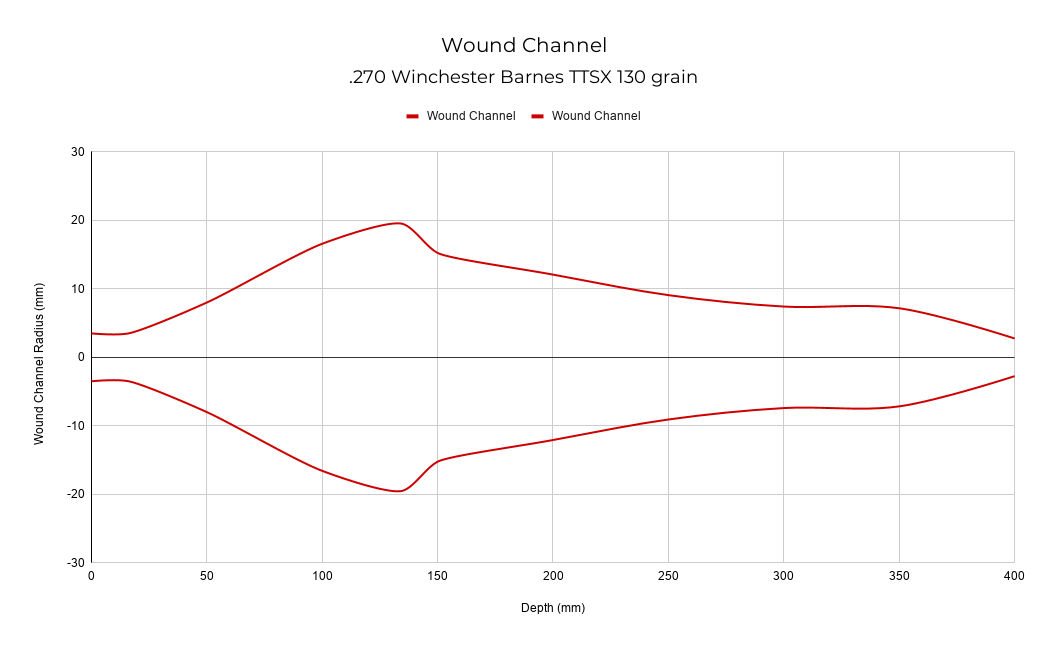
Chart 1- A graphical representation of the wound channel produced by the 130-grain Barnes TTSX from a .270 Winchester in a Clear Ballistics gelatin.
How and Where to Purchase
Of the three bullets in the Barnes line-up of lead-free bullet options, the TTSX is one loaded in the most different loadings. There are 27 different configurations under just the VOR-TX Rifle factory loadings, and 33 different individual bullets for the handloader. On the Barnes website, the factory-loaded options range from an 80-grain in .243 Winchester to a 225-grain, .338 Winchester Magnum, and prices range from $53.99 for that .243 80-grainer up to $95.99 for the .300 Remington Ultra Magnum options. When it comes to components, the smallest available is a .22 caliber 50-grain at $41.99 for 50, while the largest is a 300-grain bullet for the .458 SOCOM at $83.99 for 50. The majority of these options are available either online or in-person from all major ammunition suppliers such as Cabelas, Sportsmans Warehouse, Bass Pro Shop, and Midway USA. There is also a smattering of these bullets that are loaded by other manufacturers such as Federal, Weatherby, Choice Ammunition, and Buffalo Bore.
Personal Experience

The author with his first buck harvested with a Barnes TTSX, selected for performance by his father.
The loading option we tested here, the 130-grain for the .270 Winchester, is actually what I used to harvest my first deer, a Blacktail, at 16 in Southwestern Oregon. That situation was a downhill angled 370-yard shot, where, due to more than a few jitters on my part, the first shot went low, but a follow-up after the deer bounded a few yards was right on the money, taking out the bottom part of the heart and both lungs, with the deer taking one step and falling dead. In the years immediately after this, my brother and I used the same rifle, scope, and bullet combination to harvest another three Blacktails at anywhere from 20 yards out to 360 yards, all with first shot kills where the deer ran less than 50 yards. My dad had originally selected this bullet after reading good things about its performance and then seeing it shoot good groups out of his hunting rifle, aka nothing to do with additional conservation benefits as a fully lead-free constructed bullet.
Conclusion
Barnes is the name most often associated with lead-free or, in this case, solid copper hunting bullets, as they have been making these projectiles the longest, since 1989, and have the most options with three main categories of lead-free bullets, including the TSX, TTSX, and LRX. My experience shooting the 130-grain TTSX bullet for a .270 Winchester, and the 127-grain LRX bullet for the 6.5 PRC, has led me to think about the Barnes bullets as some of the most consistent options on the market and ones that I never have any reservations about recommending to people looking to switch to lead-free ammunition or check out new options.

Micah Dungey
Micah is the former Non-lead Outreach Coordinator for the Institute for Wildlife Studies, is a volunteer hunter education instructor, and now works to bring new hunters into the community.
